

Files
Date of Presentation
Spring 2026
Document Type
Book
Department
Medicine
Faculty Mentor
DenYelle Kenyon, PhD
Keywords
Medical Education, curriculum, bias
Subject Categories
Curriculum and Instruction | Medical Education | Medicine and Health Sciences
Abstract
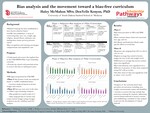
Implicit biases within medical education can influence learners’ perceptions, clinical reasoning, and future patient interactions. This study analyzed implicit bias within the University of South Dakota Sanford School of Medicine’s (USD SSOM) Pillar I pre‑clerkship curriculum using a two‑phase mixed‑methods approach. Phase I consisted of a subjective content analysis of randomly selected lectures across ten system blocks, examining both textual and visual materials for evidence of bias in eleven domains identified by the Association of American Medical Colleges. Phase II employed quantitative survey data from the MD Class of 2027, who rated perceived bias in lecture content, lecture images, exam content, and exam images across the same eleven categories. Subjective review revealed recurring patterns of racial and ethnic bias, particularly through overrepresentation of pathologies presented on Caucasian skin and limited diversity in clinical examples. Survey findings showed low mean bias ratings overall, though race, weight, and socioeconomic status emerged most consistently across content types. Chi‑square analysis identified race and ethnicity as the only bias domain demonstrating a statistically significant difference across content modalities (p = 0.0493). Students additionally noted that diversity dialogues were effective in raising awareness of bias within medical instruction. Recommendations include diversifying imagery, varying patient demographics in clinical vignettes, incorporating disability and weight diversity in physical examination examples, and developing a standardized bias‑avoidance checklist for faculty. This study highlights areas for improvement in the curriculum and provides actionable strategies to reduce implicit bias and promote equitable medical education.
Recommended Citation
McMahon, Haley J. and Kenyon, DenYelle, "Bias Analysis and the Movement Toward A Bias-Free Curriculum" (2026). Scholarship Pathways Program. 16.
https://red.library.usd.edu/spp/16