

Files
Download Full Text (1.5 MB)
Date of Presentation
5-7-2026
Document Type
Poster
Department
Medicine
Faculty Mentor
Marc Dvorack, MD, University of South Dakota Sanford School of Medicine
Second Advisor
Leah Naasz, University of South Dakota Sanford School of Medicine
Third Advisor
Meagan Kray, University of South Dakota Sanford School of Medicine
Keywords
skin cancer detection, massage therapists, mole check card, continuing education
Subject Categories
Medical Education | Medicine and Health Sciences | Skin and Connective Tissue Diseases
Abstract
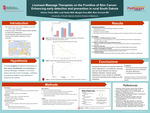
Title: Licensed Massage Therapists on the frontlines of skin cancer detection: A pilot educational intervention in rural South Dakota
Authors:
Kianna Thelen, MD | Mentor: Marc Dvoracek, MD
Introduction: Skin cancer is the most common malignancy in the United States. Early detection improves outcomes, yet rural communities face barriers to dermatologic care. Licensed massage therapists (LMTs) are uniquely positioned to observe skin changes during client encounters. This intervention aims to assess the impact of a tailored educational intervention on rural LMTs’ knowledge, confidence, and practices for identifying suspicious skin lesions.
Methods: Between July 2023 and January 2024, 46 LMTs and massage therapy students in South Dakota participated in a 45-minute session delivered in person or virtually. Content included risk factors, the ABCDE framework, and communication strategies. Surveys were administered pre-intervention, post-intervention, and at 3-month follow-up. Analyses included paired t-tests, McNamar’s tests, repeated-measures ANOVA, Kaplan-Meier survival analysis, and cost-benefit modeling.
Results: Prior to training, only 8.7% of participants felt extremely comfortable identifying suspicious lesions. This increased to 51.1% immediately post-intervention and 79.5% at 3 months (p < .001). The likelihood of recommending physician follow-up rose from 60.9% to 77.8% post-intervention and to 89.7% at follow-up (p = .02). Kaplan-Meier analysis revealed a median 10-day interval to the first client alert, with 82.3% of participants notifying at least one client by 3 months. Cost-benefit modeling estimated ~$12,000 saved per early lesion detected.
Conclusions: Educational outreach to rural LMTs significantly improved sustained confidence and proactive client behaviors in skin cancer detection. This scalable, cost-effective model empowers other health care professionals and addresses dermatologic disparities in underserved communities.
Recommended Citation
Thelen, Kianna; Naasz, Leah; Kray, Meagan; and Dvorack, Marc, "Licensed Massage Therapists on the Frontline of Skin Cancer: Enhancing Early Detection and Prevention in Rural South Dakota" (2026). Scholarship Pathways Program. 29.
https://red.library.usd.edu/spp/29