

Files
Download Full Text (283 KB)
Date of Presentation
2025
Document Type
Poster
Department
Medicine
Faculty Mentor
DenYelle Kenyon, PhD
Keywords
menstrual hygiene management, menstruation, reproductive health, period, period poverty, menstrual history
Subject Categories
Medicine and Health Sciences
Abstract
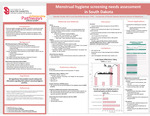
Introduction: Menstrual hygiene management (MHM) is essential to women’s reproductive health; literature demonstrates there are mental, social, and economic consequences to inadequate MHM in rural and developing countries. Emerging studies show that US women who are impoverished, experiencing homelessness, or incarcerated also face poor MHM. To understand the implications of poor MHM in South Dakota, a largely rural state, a thorough gynecologic health history is essential; this needs assessment explores the scope of MHM questions asked by SD providers.
Methods: This study used survey methodology to determine the quality and depth of gynecologic health histories commonly taken regarding hygiene. The electronic survey was sent to local primary care providers and nursing staff via email. The survey records the provider's awareness of their patients' menstrual hygiene, and the frequency of specific questions asked. The results of this needs-assessment led to the development of a waiting room screening tool that would allow providers efficient access to their patients’ MHM information.
Results: Providers’ (N = 70) awareness of MHM in South Dakota varied. The maximum score (57) denotes a respondent who selected “very aware” and “always” for each question. The average score was 22.11; scores ranged from 9 to 47. 24% said they were not at all aware of their patients’ access to MHM products. 74% report never asking their patients if they have access to adequate water and sanitation resources. 15% report never asking their patients which type of hygiene product they use.
Discussion: This needs assessment demonstrates providers may lack vital information with the potential to inform patient care. While poor MHM is considered in less developed nations, it persists unidentified in populations in South Dakota.
Recommended Citation
Shafer, Mariah M. and Kenyon, DenYelle, "Menstrual Hygiene Screening Needs Assessment in South Dakota" (2025). Scholarship Pathways Program. 3.
https://red.library.usd.edu/spp/3