

Files
Download Full Text (592 KB)
Date of Presentation
5-7-2026
Document Type
Poster
Department
Medicine
Faculty Mentor
Sabina Choudhry, MD, University of South Dakota Sanford School of Medicine & Avera Health System
Second Advisor
Christine Pocha, MD, PhD, MPH, University of South Dakota Sanford School of Medicine & Avera Health System
Third Advisor
Katherine Ziegler, MPH, University of South Dakota Sanford School of Medicine & Avera Health System
Keywords
diagnostic testing, metabolic dysfunction–associated steatotic liver disease, liver biopsy, magnetic resonance elastography
Subject Categories
Digestive System Diseases | Investigative Techniques | Medicine and Health Sciences
Abstract
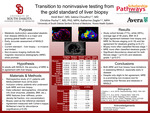
Purpose: Metabolic dysfunction–associated steatotic liver disease (MASLD), formerly known as non-alcoholic fatty liver disease, represents a rapidly growing public health concern, affecting roughly 30% of the global population. MASLD encompasses a spectrum from simple steatosis to its more progressive form, metabolic dysfunction–associated steatohepatitis (MASH). Early and accurate assessment of liver disease is critical for risk stratification and management, yet the current gold standard-liver biopsy remains invasive, costly, and limited by sampling variability and interpretive subjectivity. Noninvasive imaging modalities, particularly magnetic resonance elastography (MRE), have emerged as promising alternatives, but their concordance with biopsy in real-world clinical practice remains underexplored.
Methods: This retrospective study analyzed medical records from 21 patients treated at a hospital system in the Upper Midwest region of South Dakota between 2018 and 2023. Eligible patients had a diagnosis of MASLD or MASH and underwent both liver biopsy and MRE. Demographic and clinical data, including age, sex, race, BMI, diabetes status, and laboratory biomarkers (liver enzymes, platelets, APRI, albumin), were abstracted. Imaging data included liver stiffness, iron concentration, and proton density fat fraction. Liver biopsy results for fibrosis and steatosis served as the reference standard. Statistical analysis included descriptive statistics, Cohen’s kappa to assess agreement, and McNemar’s test for discordance, with significance set at p< 0.05.
Results: The study cohort was predominantly female (71%), white (95%), non-Hispanic (100%), with a mean age of 57.7 years and mean BMI of 34.9. Slight agreement was observed between liver biopsy and imaging for fibrosis staging (κ=0.18), and fair agreement for steatosis grading (κ=0.21). Moderate agreement was found for steatosis grade 0 (κ=0.44), and fair agreement for fibrosis stage 1 (κ=0.34). Notably, biopsy more frequently assigned fibrosis stage 1, while imaging more often graded steatosis as grade 1. McNemar’s test revealed significant discordance for fibrosis stage 1 (p=0.025) and steatosis grade 1 (p=0.014), indicating systematic differences in classification between modalities.
Conclusions: These findings highlight the limitations of both liver biopsy and MRE in assessing MASLD, particularly in early-stage disease. Although MRE and MRI-based biomarkers offer noninvasive, reproducible, and comprehensive liver evaluation, their concordance with histopathological findings remains only slight to fair. This limited agreement stems from biopsy sampling and interpretive variability, along with technical and biological factors affecting imaging. Nevertheless, MRE’s safety, comfort, and repeatability support its growing role in MASLD evaluation, especially for monitoring over time.
Recommended Citation
Bien, Heidi; Choudhry, Sabina; Pocha, Christine; and University of South Dakota Sanford School of Medicine & Avera Health System, "Transition to Noninvasive Testing from the Gold Standard of Liver Biopsy" (2026). Scholarship Pathways Program. 18.
https://red.library.usd.edu/spp/18