

Files
Download Full Text (484 KB)
Date of Presentation
5-7-2026
Document Type
Poster
Department
Medicine
Faculty Mentor
Tanner J. Ferguson, MD, University of South Dakota Sanford School of Medicine & Vance Thompson Vision
Second Advisor
John P. Berdahl, MD, University of South Dakota Sanford School of Medicine & Vance Thompson Vision
Third Advisor
Daniel C. Terveen, MD, University of South Dakota Sanford School of Medicine & Vance Thompson Vision
Keywords
GIS-imaging, ocular, corneal topography, treatment plans, patient care planning, diagnostic techniques, LASIK
Subject Categories
Medicine and Health Sciences | Ophthalmology | Surgery
Abstract
Visual Acuity and Quality of Life Results in a Randomized Trial of Topography-Guided with GIS-Software Versus Wavefront Optimized LASIK
Elise V.H. Meide, MD | Daniel C. Terveen, MD
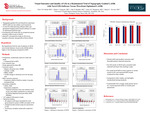
Purpose: To compare post-operative visual acuity, refractive outcomes and patient-reported visual quality of life between topography-guided (TG) laser-assisted in situ keratomileusis (LASIK) with novel geographic imaging system (GIS) based software versus wavefront-optimized (WFO) LASIK. Main outcome measures included the rate of patients with uncorrected distance visual acuity (UDVA) of 20/16 or better 3 months post-operatively. Secondary and exploratory endpoints include best corrected visual acuity (BCVA), residual refractive error, low contrast visual acuity, percent of patients with post-op UDVA equal or better to pre-op corrected distance visual acuity (CDVA) and subject satisfaction as measured by Patient Reported Outcome With LASIK questionnaire.
Methods: This was a prospective, multicenter, dual-arm randomized clinical trial. 117 eligible, bilateral LASIK subjects were randomized 1:1 to bilateral TG using GIS surgical planning software or WFO using the Wavelight EX500 excimer laser. Patients and technicians assessing patients were blinded. The 32-question PROWL visual questionnaire was administered at the pre-operative appointment and 3 months postoperatively; each response was transformed linearly to a score with a range of 0-100.
Results: 117 subjects (234 eyes) were enrolled. For monocular UDVA, 29% of WFO achieved 20/12.5 and 74.6% 20/16 or better versus 18% (p=0.05) and 67% of GIS eyes (p=0.29), respectively. For MRSE, the % of eyes within ±0.50 D of plano was 97% in WFO and 91% in GIS (p=0.09). WFO had 14% of eyes gain 2 lines of CDVA versus 7% (p=0.09) in the GIS group. Overall satisfaction was similar between groups (93.66, 91.77, p=0.18) but there was increased satisfaction as it relates to magnitude of starbursts in GIS (85.74 GIS, 81.62 WFO, p=0.03).
Conclusions: WFO demonstrated significantly higher rates of 20/12.5 UDVA but achieved similar rates of 20/16 UDVA and slightly superior refractive outcomes compared to GIS. Overall, visual and refractive outcomes were favorable in both groups. Both groups had high patient satisfaction with the category of starbursts significantly higher in the GIS group.
Recommended Citation
Meide, Elise V.H.; Ferguson, Tanner J.; Berdahl, John P.; Thompson, Vance M.; and Terveen, Daniel C., "Visual Outcomes and Quality of Life in a Randomized Trial of Topography-Guided LASIK with Novel GIS-Software Versus Wavefront Optimized LASIK" (2026). Scholarship Pathways Program. 23.
https://red.library.usd.edu/spp/23