

Files
Download Full Text (389 KB)
Date of Presentation
5-7-2026
Document Type
Poster
Department
Medicine
Faculty Mentor
Valeriy Kozmenko, M.D., University of South Dakota Sanford School of Medicine
Second Advisor
Paul Thompson, Ph.D., University of South Dakota Sanford School of Medicine
Keywords
student confidence, evidence-based medicine, M-STATS survey, Fisher Society curriculum
Subject Categories
Biomedical Informatics | Data Science | Medical Education | Medicine and Health Sciences | Statistics and Probability
Abstract
Assessing Trends in Medical Students’ Perceptions Regarding Data Analysis and Statistics Knowledge and Skills
Ethan Noble, MD | Mentors: Valeriy Kozmenko, MD, Paul Thompson, PhD
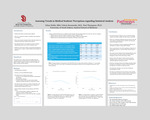
Introduction: The use of evidence-based medicine requires that physicians are able to properly analyze and interpret the results of new research. The development of new research and medical knowledge is swift, and a strong foundation in statistics and research is needed for physicians and medical students to keep up with new research. Curriculum in medical education often lacks in-depth coverage of the subject, and additional curriculum has been shown to enhance student confidence and ability to critically analyze research. Studies have found that group-based and hands-on learning experiences lead to improved attitudes and confidence in statistics. The Fisher Society is an advanced statistics interest group created to provide additional opportunities for students to learn and apply statistical skills. The creation of a new online resource providing instruction regarding statistics and data analysis for medical students will increase knowledge and skills in statistics and data analysis while allowing students to work through problems at their own pace and schedule.
Methods: A website was created to further the goals of the Fisher Society, which is an advanced statistics interest group. The website contained informational videos that instructed students on how to perform statistical analysis as well as background information on the tests. The Fisher Society provided meetings, in-person and online, to practice performing statistical tests with instructor feedback and in a group setting. The Medical Students’ Attitude towards Statistics (M-STATS) survey was sent to all Sanford School of Medicine students, as the results of the survey were compared to scores from previous years to analyze changes in student confidence in statistics knowledge and skills.
Results: The class of 2026 had several students successfully complete the Fisher Society curriculum. The Fisher Society website was created and will remain available to students in future classes. Data analysis revealed a statistically significant decrease in interest regarding statistics (p=0.015) and furthering statistical knowledge (p = 0.004) between 2022 and 2025. There was persistence in the student belief that statistics will be important to their future practice as a physician (p = 0.402).
Conclusions: Overall, medical student beliefs regarding statistics and data analysis have appeared to remain stable over the last several years, except for a decreased interest in learning the subject. Statistics continues to be regarded as an important aspect of medical education by students and institutions, and competence in the subject is a vital part of medical practice as it allows physicians to properly interpret the vast amounts of new medical research being produced. By creating new approaches to statistics and changing how statistics are taught, medical institutions may be able to improve medical student confidence and practical abilities regarding statistics.
Recommended Citation
Noble, Ethan; Kozmenko, Valeriy; and Thompson, Paul, "Assessing Trends in Medical Students’ Perceptions Regarding Statistical Analysis" (2026). Scholarship Pathways Program. 25.
https://red.library.usd.edu/spp/25
Included in
Biomedical Informatics Commons, Data Science Commons, Medical Education Commons, Statistics and Probability Commons