

Files
Download Full Text (1.5 MB)
Date of Presentation
5-7-2026
Document Type
Poster
Department
Medicine
Faculty Mentor
J. Agar, Research Service, Sioux Falls VA Healthcare System
Second Advisor
T.P. Beresford, PhD, Laboratory for Clinical and Translational Research in Psychiatry, Denver VA Medical Center & Department of Psychiatry, University of Colorado School of Medicine
Third Advisor
P.J. Ronan, PhD, Research Service, Sioux Falls VA Healthcare System & University of South Dakota Sanford School of Medicine, Department of Psychiatry and Division of Basic Biomedical Sciences & Laboratory for Clinical and Translational Research in Psychiatry, Denver VA Medical Center
Keywords
alcohol, binge drinking, immunosuppressant, liver transplant
Subject Categories
Immune System Diseases | Medicine and Health Sciences | Substance Abuse and Addiction
Abstract
Calcineurin-Mediated Immunosuppressants in Binge Ethanol Drinking and Stress Responsivity
Emily Kirschenmann MD | Patrick J. Ronan PhD
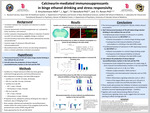
Introduction: Previous research has found that the calcineurin-mediated immunosuppressants cyclosporine A (CsA) and tacrolimus inhibit binge alcohol drinking in mice. Further research has shown that this effect is mediated directly in brain, as intracerebroventricular administration also significantly decreases drinking. As these immunosuppressants have severe systemic toxic effects along with dangerous inhibition of immune function, our goal is to determine proximal mechanisms by which these immunosuppressants are working in order to develop effective treatments for alcohol use disorder (AUD) with fewer side effects. One major question is whether immunosuppressants are acting through neuronal signaling pathways, regulating reward and stress/anxiety pathways, or in glia, mediating neuroinflammatory effects.
Methods: This study employs genomic, molecular, transcriptomic, metabolomic, anatomic, and behavioral approaches to explore the relationship between binge alcohol drinking, stress, and calcineurin mediated immunosuppressants. Calcineurin is a somewhat ubiquitous phosphatase, involved in a wide range of signaling pathways - both in neurons and glia. The authors developed multiple transgenic models using a floxed calcineurin line (C57BL/6-Ppp3r1tm1Stl/J) crossed with various Cre driver lines to knockout CN in various neuronal or glial populations. Results are presented from two neuronal CN knockout lines: a “panneuronal” CN knockout line (CamKIIα-Cre) and a corticotropin releasing factor specific CN knockout line (CRH-Cre). The authors are also investigating the effects of CsA on candidate brain signaling pathways in models of both binge drinking and stress, as stress is a primary factor driving drinking behaviors. The CeA and PVN were microdissected from 300 mm frozen sections and qRT-PCR was performed.
Results: Panneuronal knockout of CN appeared to have minimal effect on binge-alcohol consumption in this study. Furthermore, CsA showed reduction in alcohol consumption in both control and CN neuronal knockout populations. Overall, CsA inhibited the stress-induced expression of a wide range of neuroinflammatory markers in these regions including cytokines such as IL-2, IL-1b, IL-6, TNFa; markers of glial activation: CD45 and Iba-1; chemokine and chemoattractant molecules such as CCR2 and CCL2; as well as other inflammatory signaling molecules such as COX-2. Some of the largest effects were seen on IL-1b and IL-6 expression in both CeA and PVN. While CsA inhibited the expression of CD45 and iba1 in the CeA, in the PVN these effects were striking.
Conclusion: These findings indicate that neuronal calcineurin is not a major contributor to binge-like alcohol consumption, as panneuronal CN deletion did not alter drinking behavior and CsA remained effective in its absence. In contrast, CsA robustly suppressed stress-induced neuroinflammatory signaling, including cytokine induction and glial activation markers, in key stress- and reward-related nuclei. Together, these results support a model in which calcineurin-mediated immunosuppressants reduce binge ethanol intake primarily through glial-dependent neuroimmune mechanisms rather than neuronal CN signaling, highlighting glial pathways as promising therapeutic targets for AUD with fewer systemic side effects.
Recommended Citation
Kirschenmann, E.; Agar, J.; Beresford, T. P.; and Ronan, P. J., "Calcineurin-Mediated Immunosuppressants in Binge Ethanol Drinking and Stress Responsivity" (2026). Scholarship Pathways Program. 22.
https://red.library.usd.edu/spp/22